What’s Actually Happening in Most Programs
Let’s be honest about what many gifted programs actually look like:
Acceleration without development. Students move through content faster, but without deliberate teaching of how to navigate challenge. They learn to value speed, not depth.
Enrichment without direction. Open-ended projects can be powerful—if students already know how to manage complexity. Most don’t. Some thrive. Others coast.
High expectations, low support. The myth that gifted students are fine on their own. So instead of structured feedback and coaching, they’re given complex work and expected to figure it out.
What’s missing is the very thing these students need most: explicit development of Learnership.
The Missing Multiplier
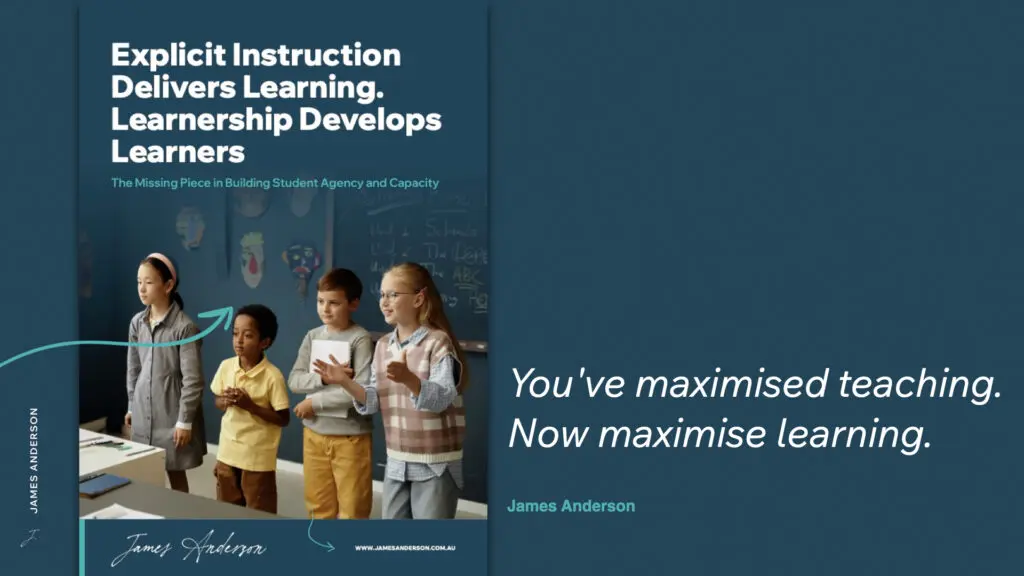
Learnership is the expertise students develop in learning itself. It’s what transforms effort into growth, mistakes into insights, and feedback into strategy.
Through five key behaviours—engaging in the Learning Zone, applying effective effort, learning from mistakes, acting on feedback, and cultivating Habits of Mind—Learnership helps students become more powerful learners. It’s not a rejection of excellence. It’s a way to create more of it, in more students, and sustain it over time.
Achievement without Learnership is fragile. Achievement built on Learnership is sustainable—and transferable.
The question isn’t whether we’ve missed some gifted students. The question is whether “giftedness” is even the right concept to begin with. Instead of asking who is worthy of extension, we should be asking how we design learning experiences that grow capability in all students.
A Different Path Forward
You don’t need to shut down your gifted program. You don’t even need to change its name. But you do need to change what it grows.
Programs built on Learnership take a different approach. They don’t just support learners who are already excelling. They help more learners become excellent. Because Learnership isn’t a trait. It’s a skillset—one that can be taught, coached, and refined.
This means shifting from selection to cultivation. From performance to growth. From outcome-based success to process-based excellence.
Your Blueprint for Transformation
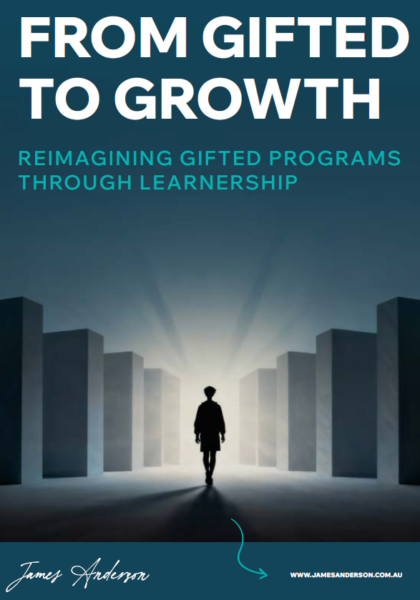
I’ve captured the complete framework in “The Problem with Gifted Programs”—a comprehensive white paper that reveals why traditional approaches often fail our highest performers, how the Learnership Matrix provides a developmental pathway for all learners, and practical strategies for redesigning programs that build capability rather than just recognise it.
You’ll find research-backed insights, implementation pathways for navigating policy constraints, and tools for measuring what actually matters—not just achievement, but growth in learning itself.
Because in the end, it‘s not about who‘s gifted. It‘s about who‘s growing.
Download the white paper to discover how your school can move from filtering for brilliance to building it.