
Today we understand quality teaching better than ever. We have skilful teachers doing a great job in our classrooms. So when the results we’re looking for still don’t come, the instinct is to look for a better teaching method. But that’s not where the gap is.
Learning isn’t the product of teaching. It’s the product of the activity of learners. And too many students are passive in that activity — they avoid challenge, leave feedback unread, and spend effort instead of investing it. We can teach those students brilliantly and still not develop them as learners.
Quality teaching matters. But it’s only part of the story.
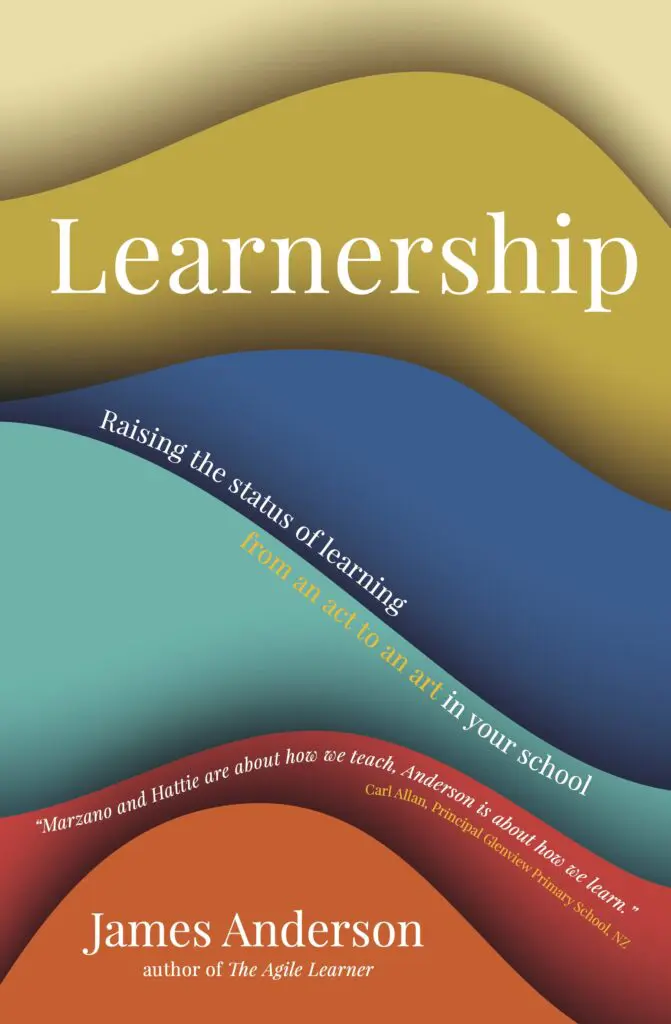
Raising the status of learning from an act to an art
We’ve spent decades developing the craft of teaching. We’ve done far less of the equivalent work for learning. We treat learning as something students simply do — an act — rather than something they can get genuinely skilful at. An art.
That’s the shift at the heart of Learnership: the expertise a person develops in learning itself. Craftsmanship is the skill of the craft. Leadership is the skill of leading. Learnership is the skill of learning. And like any expertise, it can be named, taught, practised, and developed.
What skilful learning actually looks like
Skilful learners aren’t simply working harder. They engage differently with the five Essential Elements that decide whether effort turns into growth:
- Challenge — they move toward work that stretches them, rather than away from it
- Habits of Mind — the dispositions they develop to keep thinking when there’s no obvious next step
- Mistakes — they treat them as information, not failure
- Advice and feedback — they seek it out and act on it
- Effort — they invest it strategically, rather than just spending it
Develop these deliberately, and you change what a student is becoming — not just what they know.
From passive to agile
Students don’t all engage with learning the same way. Some have learned to avoid challenge; others tolerate it; a few have been helped to seek it out. Learnership maps that progression — from passive learners through to Agile Learners who drive their own growth and are ready for whatever comes after school. The work of a school is to move every student along that continuum, one experience at a time.
This is also where mindset comes in. A growth mindset is the will to act — the belief that effort can change your circumstances. But belief alone won’t generate growth. Paired with the skills to act on it, belief becomes movement. The Mindset Continuum and Learnership work together: one provides the will, the other the way.
Where to start
You can’t develop what you can’t see. The Learnership Diagnostic gives schools a way to evaluate the learning culture they actually have — and to track how it shifts as students become more skilful. From there the work is deliberate: build a shared language, teach the elements of learning explicitly, and get your teachers developing learners, not just delivering learning.
The opening chapters of Learnership introduce the concept in full — the learning problem, the five Essential Elements, the Mindset Continuum, and the Learnership Diagnostic. Read them, and see what becoming skilful at learning could look like in your school.